
Cart
0
How to Choose a Focus Factor Dietary Supplement: A Practical Guide
With so many dietary supplements on the market — different formulations, tablet counts, and labels like "extra strength" — comparing options can quickly feel overwhelming. This guide walks through the practical details worth reviewing when choosing a Focus Factor dietary supplement, so you can make a more informed decision based on facts rather than marketing language.
What Is a Focus Factor Dietary Supplement?
A Focus Factor dietary supplement is a product intended to be taken regularly, often as tablets, capsules, or another format, as part of a person's broader daily wellness routine. Many daily supplements include a multivitamin component, combining a range of vitamins and minerals into a single product.
Formulations, serving sizes, and directions vary significantly between products, so it's worth reviewing the specific label of any supplement you're considering rather than assuming all daily supplements are alike.
What to Look for in a Focus Factor Supplement
Before adding a Focus Factor dietary supplement to your routine, here are the practical details worth checking:
Ingredient Transparency
Look for a product that clearly lists every ingredient, rather than relying on vague front-of-label descriptions.
Serving Size
Check how many tablets make up the recommended daily serving, since this varies by product.
Tablet Count
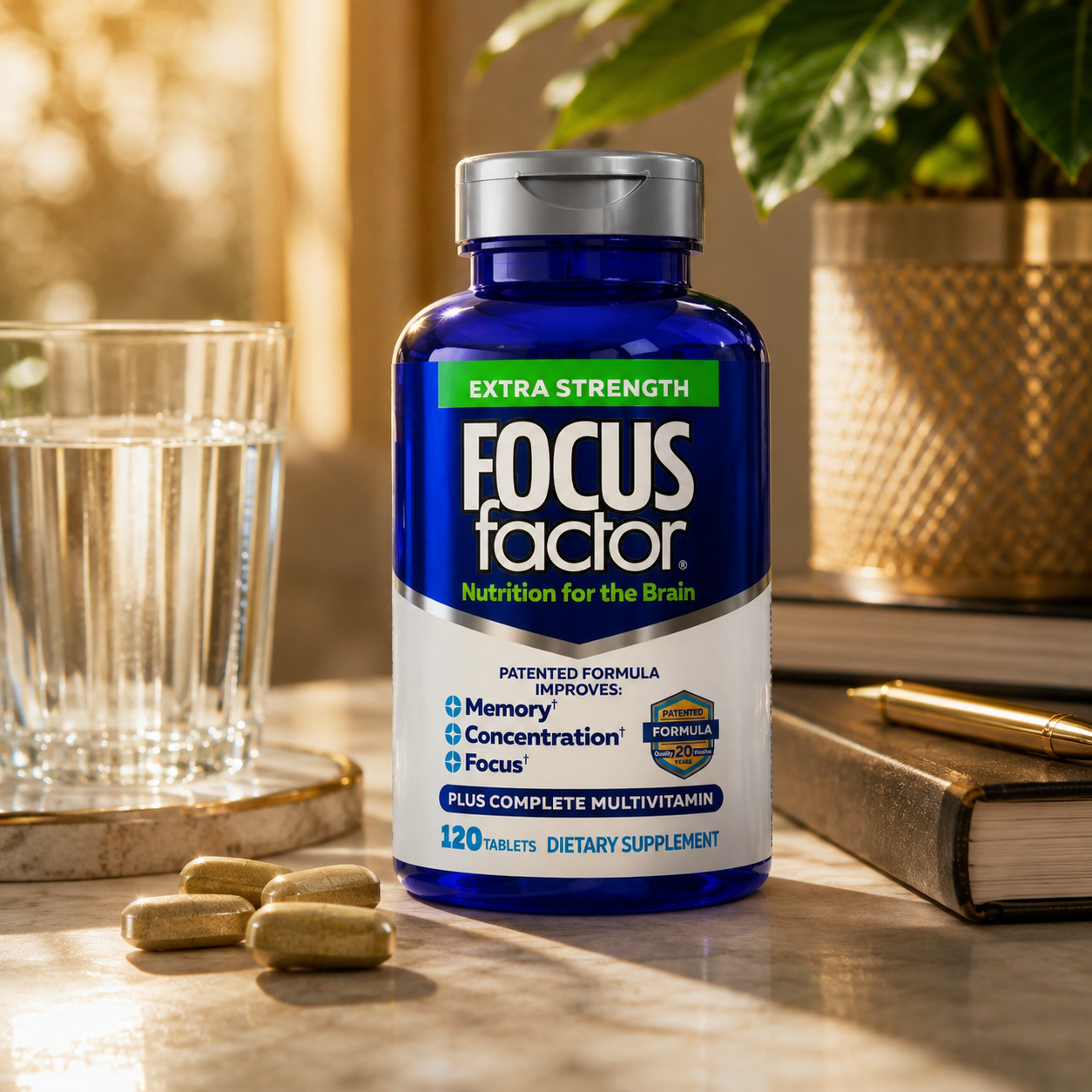
Products are often packaged with a set supply, such as 120 tablets per bottle. Comparing this against the serving size helps you understand how long a bottle is likely to last.
Supplement Format
Daily supplements come in different formats — tablets, capsules, or chewables. Format often comes down to personal preference.
Directions for Use
The label's directions describe how the manufacturer intends the product to be taken. Following these directions, rather than adjusting the amount, is the most reliable approach.
Other Ingredients
Beyond the active vitamins and minerals, labels also list other ingredients, such as fillers, binders, or coatings.
Warnings
Review any warnings or cautionary statements printed on the label before starting a new supplement.
Storage Instructions
Proper storage, as described on the label, helps maintain a product's intended quality over time.
Manufacturer Information
Clear manufacturer contact details on the label can be useful if you have questions about a specific formulation.
Understanding Multivitamin Supplements
When a Focus Factor dietary supplement includes a multivitamin component, the Supplement Facts panel becomes especially important. This panel lists each vitamin and mineral included, along with the amount per serving.
Rather than relying on general assumptions about what a multivitamin "usually" contains, review the specific Supplement Facts panel on the product you're considering. This gives you an accurate picture of what's actually included, since formulations can differ meaningfully between products.
What Does "Extra Strength" Mean?
"Extra strength" is a term you'll often see on supplement packaging, but it's primarily a product-positioning label rather than a guarantee of a specific outcome. In practice, it typically signals that a product is formulated differently — for example, with different ingredient amounts — compared to a standard version of a similar product.
Rather than assuming what "extra strength" means for your particular needs, look at the actual Supplement Facts panel, serving size, and ingredient amounts listed on the label. This gives you concrete information to compare against other products, instead of relying on the term itself.
How to Read a Focus Factor Dietary Supplement Label
A simple checklist can make comparing dietary supplement labels easier:
- Supplement Facts panel — What ingredients are included, and in what amounts?
- Serving size — How many tablets make up one recommended serving?
- Ingredient amounts — What quantity of each ingredient is included per serving?
- Directions — How does the manufacturer recommend taking the product?
- Other ingredients — What non-active ingredients are included, such as fillers or coatings?
- Warnings — Are there any specific cautions listed?
- Storage information — How should the product be stored to maintain quality?
-
Manufacturer details — Is there clear contact information available?

Running through this checklist for each product under consideration gives you a more consistent, objective basis for comparison.
Comparing Tablet Count and Serving Size
It's tempting to compare products by bottle size or tablet count alone, but this figure only tells part of the story. A bottle listing 120 tablets is only meaningful once you know the recommended daily serving size.
Before purchasing, consider:
- How many tablets make up one recommended serving
- How many total tablets are included in the bottle
- How long the bottle is likely to last based on the recommended use
Comparing these numbers across products — rather than judging by tablet count or price alone — gives a more accurate sense of what you're actually purchasing.
Building a Simple Focus Factor Supplement Routine
For those who choose to add a Focus Factor dietary supplement to their routine, consistency tends to matter more than timing. A few practical approaches some people use include:
- Pairing it with an existing habit, such as breakfast, to make it easier to remember.
- Following the serving directions on the label exactly as written, rather than adjusting the amount.
- Storing the product properly, according to label instructions, to help maintain quality.
- Using a pill organizer if managing more than one supplement.
Since directions and serving sizes vary between products, always default to the specific instructions printed on your product's label — this product, for example, is intended for adults 18 and older, so checking age recommendations is an important part of that process.
Questions to Ask Before Buying a Focus Factor Supplement
What ingredients are included? Check the label for a full, specific ingredient list rather than relying on general front-of-package descriptions.
Are the ingredient amounts clearly listed? A transparent label should specify not just which ingredients are included, but the amount of each one per serving on the Supplement Facts panel.
What is the recommended serving size? Review the directions to see how many tablets are recommended per day, and follow that guidance rather than estimating.
How many tablets are included? Compare the total count — for example, 120 tablets per bottle — against the recommended serving size to estimate how long the bottle will last.
What does "extra strength" mean according to the label? Since this is a positioning term rather than a standardized measurement, check the actual Supplement Facts panel and ingredient amounts to understand what makes the product different from a standard version.
Are there any warnings or usage instructions? Review the label for cautionary statements, including any age recommendations, such as products intended for adults 18 and older.
Does the product fit my dietary preferences? Check whether the formulation aligns with any dietary needs or preferences you have.
Should I speak with a healthcare professional before using it? This is generally recommended if you're pregnant, nursing, taking medication, have an existing health condition, or are otherwise unsure whether a supplement is a good fit for your circumstances.
Final Thoughts
Choosing a Focus Factor dietary supplement comes down to comparing practical, verifiable details: ingredient transparency, serving size, tablet count, and what terms like "extra strength" actually mean on the label. Since individual needs and circumstances vary, a daily supplement is best considered as one part of a broader wellness routine rather than a stand-alone solution. If you have questions about whether a particular product is right for you, reviewing the complete label and speaking with a qualified healthcare professional are the most reliable next steps.